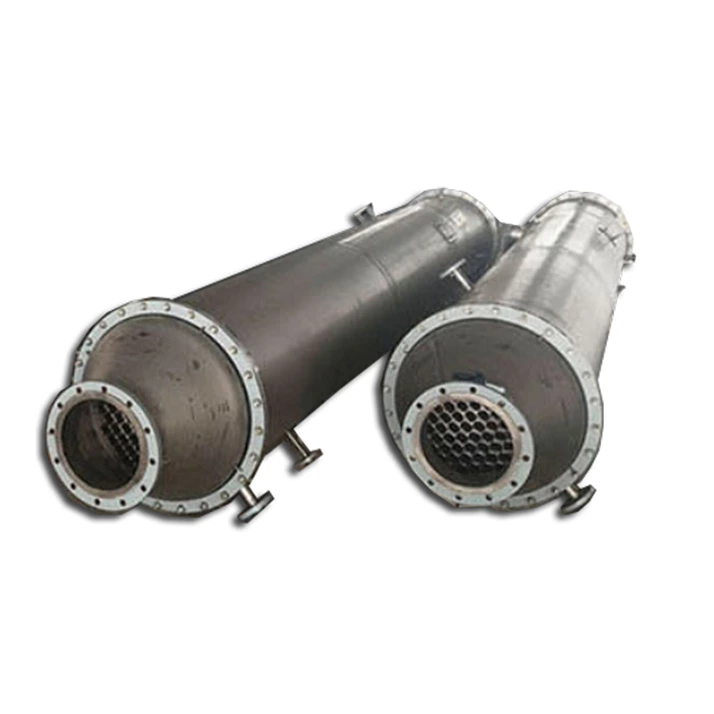
90% of tube heat exchanger leaks occur at this joint! How to choose the connection method between tubes and tube sheet?
If you've ever done heat exchanger maintenance or process management, you've probably had this experience: a piece of equipment is running perfectly fine, and suddenly the tube side and shell side become misaligned. After checking and checking, the problem isn't in the tube bundle corrosion or the shell welds, but rather in the "joint" where the tubes connect to the tube sheet .
This joint is the weakest and most critical part of the heat exchanger. If the connection method is chosen correctly, the equipment can run stably for ten years; if the wrong method is chosen, leaks will start to need to be plugged, welded, or even scrapped after only three months of operation.
Today we'll break down and explain the three mainstream connection methods —expansion joint, welding, and expansion-welding combination —in detail: what working conditions each is suitable for, what its fatal shortcomings are, and the pitfalls most easily encountered when selecting them.
1. Expansion joint: A craft passed down from our ancestors, still relevant today.
Expansion joint is the oldest connection method. Simply put, it involves inserting a tube into a tube sheet hole and then using mechanical or hydraulic methods to expand the tube, so that the outer wall of the tube is tightly pressed against the tube sheet hole wall , forming a seal through huge radial extrusion force.
What working conditions is it suitable for?
- The pressure is not high (usually ≤4.0 MPa).
- Temperature changes are minimal (temperature difference ≤ 50℃)
- The tube sheet is relatively thick, and the tube material has good ductility (such as carbon steel, copper, and stainless steel).
- The medium is not highly toxic or extremely flammable.
The advantages are also very real:
- No need for drilling and welding , no heat-affected zone, and no thermal deformation of the tube sheet.
- Repair and replacement are convenient ; simply remove the old tube and expand a new one.
- Low cost , simple equipment, and can be operated by skilled workers.
But the drawbacks are equally painful:
- It has limited tensile strength and is prone to loosening under high pressure.
- It is sensitive to temperature fluctuations; thermal expansion and contraction will gradually "eat away" the expansion force.
- The machining precision requirements for tube sheet holes are extremely high; even slight defects in surface roughness or roundness can cause the seal to fail.
- It cannot be used with toxic or flammable media—a leak would be a safety incident.
In short: expansion joints are a "labor-intensive" connection method; they are cheap and easy to use, but don't put them in jobs they can't handle.
II. Welding: A mainstay of modern industry, but not a panacea.
Welding is currently the most widely used method. The tube passes through the hole in the tube sheet, and the tube end is fused to the tube sheet as one piece using argon arc welding or manual electric arc welding on the front side of the tube sheet.
What working conditions is it suitable for?
- High temperature (pipe wall temperature can reach over 500℃)
- High pressure (up to 20 MPa or even higher)
- The medium is highly corrosive, or may be toxic, flammable, or explosive.
- In situations where absolute sealing is required
The advantages of welding are very significant:
- Excellent sealing performance , with no gaps in the fusion zone, virtually eliminating leakage channels.
- It has high tensile strength , and the tube and tube sheet are firmly welded together, allowing it to withstand much greater forces than expansion joints.
- Adaptable to high temperature fluctuations , provided the right materials are selected, thermal fatigue performance is far superior to that of expansion joints.
But it also has its weaknesses:
- The heat-affected zone of a weld is a weak point, prone to intergranular corrosion or stress corrosion cracking.
- Tube sheets deform due to heat ; large tube sheets require straightening after welding.
- Repairing it is extremely difficult . Once it's welded shut, leaks will require plugging the pipes, and if a certain percentage of the pipes are blocked, the entire unit will be scrapped.
- The welding requires high skill ; porosity, slag inclusions, and incomplete penetration are common defects.
- Welding dissimilar materials is a challenge, such as titanium tubes and stainless steel tube sheets, which require transition joints.
In short: welding is a "fire-sealed" connection method, reliable but domineering, once welded on, it is prepared for "one-time use".
3. Expansion welding: Expensive, but the safest option.
Expansion welding, as the name suggests, involves first expanding the joint and then welding it , or vice versa, combining the advantages of both methods.
The common practice is to first use hydraulic or mechanical expansion to tighten the tube onto the tube sheet, which serves to seal and resist vibration. Then, a sealing weld or strength weld is made at the tube end to bear the pull-out force and ensure an absolute seal.
What working conditions is it suitable for?
- The operating conditions are harsh, with high temperatures and pressures.
- The medium is extremely hazardous (e.g., highly toxic, strong carcinogens).
- The equipment requires a long service life and a high safety margin.
- In applications with thicker tube sheets and higher thermal stress,
Why are more and more design institutes choosing this solution as their first choice?
- Double protection – expansion joints are responsible for vibration resistance and micro-sealing, while welding is responsible for main sealing and pull-out resistance, each performing its specific function.
- Effectively prevents crevice corrosion —expansion joints eliminate the tiny gaps between the tube sheet holes and the outer wall of the tubes, and welding seals the tube end faces, leaving no place for the medium to penetrate.
- Extending maintenance cycles – by complementing and covering weak links in a single connection, equipment lifespan can typically be extended by 30% to 50%.
Of course, it also has its barriers to entry:
- Costs have increased significantly – an additional process doubles the working hours and inspection requirements.
- The order of processes matters —welding before expansion or expansion before welding—as it has a significant impact on equipment performance and residual stress distribution; doing it incorrectly can be counterproductive.
- This requires high manufacturing capabilities ; it's not something a small workshop can consistently do well.
In short: expansion welding is a "double insurance" approach, paying for peace of mind, and is suitable for critical equipment where safety is the top priority.
IV. Ultimate Guide to Product Selection: Understand How to Choose with One Table
| Operating conditions | Recommended method | Not recommended |
| Small-diameter heat exchangers for ambient temperature, low pressure, and non-toxic media. | expansion joint | Welding (high cost, difficult to repair) |
| High temperature (≥300℃) or high pressure (≥6.4 MPa) | welding | Expansion joint (insufficient strength) |
| Large temperature difference (≥80℃) and heat circulation | Expansion welding | Pure expansion joint (easily loosens due to thermal expansion and contraction). |
| Toxic, flammable and explosive media | Expansion weld or strength weld | Pure expansion joint (unreliable seal) |
| The heat exchange tubes and tube sheet are made of dissimilar materials (e.g., titanium-steel). | Expansion welding (requires transition joint) | Direct welding (welding dissimilar materials is difficult) |
| Requires long lifespan and low maintenance rate | Expansion welding | Single approach (risk is relatively concentrated) |
Fifth, one last reminder: Don't just focus on the connection method itself.
Many people only look at the connection method when choosing a product, but they overlook two key prerequisites:
- The machining quality of tube sheet holes —regardless of the method used, if the roughness, roundness, and perpendicularity of the tube sheet holes do not meet the standards, it's all for naught. Expansion joints that are not tight enough, and welds that are not fully penetrated, cannot be salvaged by expansion welding alone.
- Material matching between heat exchange tubes and tube sheets – differences in hardness, thermal expansion coefficients, and electrochemical potentials – must be clearly verified before selection.
Heat exchanger leaks are never a problem at "a single point," but rather the result of accumulated issues from design and manufacturing to installation. Tube sheet connections, as the most critical link, deserve an extra 20% of your attention in decision-making—because they can potentially determine 80% of the entire equipment's lifespan.