Don't discharge RO concentrate as "wastewater"! The key to saving money in factories lies in these 9 words.
In industrial settings, RO concentrate has always been a problematic issue. Direct discharge poses high environmental risks; treatment at wastewater treatment plants is costly; and leaving it untreated ties up system capacity. However, solving the industrial RO concentrate problem doesn't need to be so complicated. The truly proven and effective solution can be summarized in just nine words:
"Reduction → Salt Separation → Resource Utilization"
Step 1: Reduction – Making the concentrated solution even "slimmer"
This is the most direct way to reduce costs.
Conventional RO systems have a recovery rate of around 75%, with the remaining 25% being concentrate. However, by introducing concentrate reverse osmosis (ROR) or high-pressure RO, this number can be further reduced; simply put, the concentrate is concentrated again.
The overall system recovery rate can be increased from 75% to 85%-90%, the volume of concentrate is reduced by more than half, and the processing capacity of downstream evaporation and crystallization decreases sharply.
The core logic of this step is: if it can be treated with a membrane, it should never be treated with a thermal method.
Step 2: Separation – breaking up the mixed salts
After reducing the volume, the concentrated water becomes a high-concentration brine. At this point, the problem is no longer "too much water," but "impurities in the salt."
Sodium chloride, sodium sulfate, and calcium and magnesium ions are mixed together:
Direct evaporation produces mixed salts that are hazardous waste, with extremely high disposal costs, a high risk of equipment scaling, and difficulties in stable system operation. The solution is to introduce nanofiltration (NF) to separate the salts. Nanofiltration membranes allow monovalent salts (NaCl) to pass through while retaining divalent salts (Na₂SO₄, CaSO₄). With one stream flowing in and the other out, the two salt solutions are clearly separated.
The significance of salt separation: turning "waste" into "raw materials".
Step 3: Resource recovery – Extracting the salt
After the salts are separated, the two streams of water each have their own destination. Through evaporation, crystallization, and drying, the two types of salt are processed into products for sale, transforming the process from costly disposal to generating revenue through salt sales. At the same time, the distilled water reuse production line has reduced both water and sewage fees.
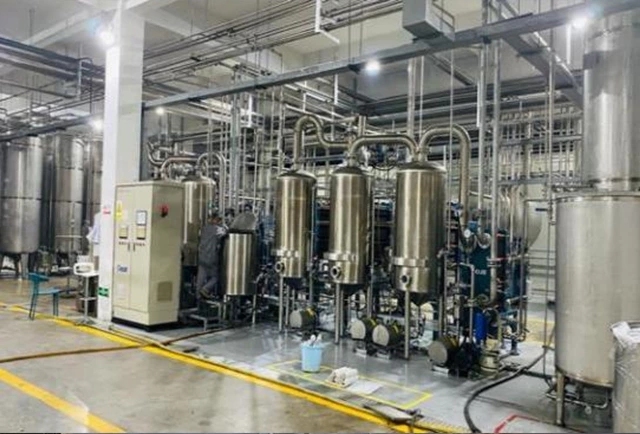
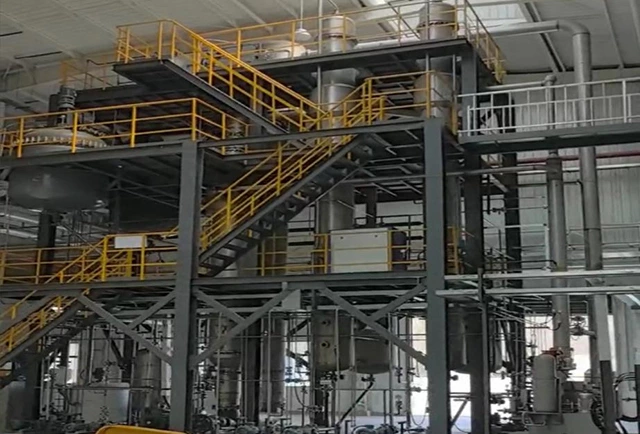
Jiangsu Gaojie Energy-Saving Equipment Group Co., Ltd. has long focused on RO concentrate and evaporation crystallization, dedicated to transforming high-salinity wastewater from a "treatment burden" into a "resource product." Through core technologies such as high-pressure reverse osmosis volume reduction, salt separation, and MVR/multi-effect evaporation crystallization, we help industrial enterprises achieve zero liquid discharge, ensuring that every drop of concentrate has a proper destination.
Multi-stage flash evaporation
Multistage flash evaporation technology is a highly efficient separation and purification technology based on the differences in the volatility of substances. It is widely used in liquid concentration, seawater desalination, environmental protection, and energy recovery. Its core principle is to achieve rapid evaporation and separation by utilizing the differences in boiling points of substances under different pressures through multistage flash chambers with progressively decreasing pressures.
I. Technical Principles
1. Flash Evaporation Process
The core of multi-stage flash evaporation is the "flash evaporation" phenomenon: a preheated liquid (such as seawater or solvent) is introduced into a flash chamber at a pressure lower than its saturated vapor pressure. Due to overheating, the liquid rapidly partially vaporizes, and the vapor condenses to obtain purified products (such as fresh water or recovered solvent). The remaining concentrate enters the next stage for further flash evaporation. The pressure and temperature of each flash chamber decrease progressively, forming a continuous separation process.
2. Key Design Features
Instantaneous heating and rapid separation: The material is heated in the flash tube for a very short time (e.g., <90 seconds) to avoid damage to heat-sensitive components.
Multi-stage structure: Separation efficiency is improved by connecting multiple stages in series. The temperature difference between stages is usually 2-3℃, and the pressure difference drives the liquid to flow stage by stage.
Energy recovery: Some systems recover the heat generated by flash evaporation through heat exchangers, reducing energy consumption.
3. Applicability and Limitations
Applicable solvents: water, ethanol, acetone, etc., but hydrogen peroxide, ethers and other volatile hazardous substances are prohibited.
Equipment parameters: such as heating power 3000W, liquid inlet rate 0-400ml/min, solvent distillation rate ≥3500ml/h (water).
II. Application Scenarios
1. Liquid Concentration
This product is used for the efficient concentration of heat-sensitive liquids in laboratory or industrial settings, such as extracts of traditional Chinese medicine or the recovery of organic solvents. Features include continuous liquid feed, energy saving and environmental friendliness, and minimal solvent loss.
2. Seawater desalination
Mainstream technology: Multi-stage flash distillation accounts for 17% of global seawater desalination capacity, and is especially suitable for large-scale plants (daily water production of 50,000 to 910,000 cubic meters).
Process flow: Hot seawater passes through multiple flash chambers in sequence, the steam is condensed into fresh water, and the concentrated brine is finally discharged. Its water production ratio (fresh water production/steam consumption) can reach 8, but the energy consumption is relatively high (24.6 kWh/m³).
3. Environmental protection and energy recovery
CO₂ capture: Multi-stage flash evaporation optimizes the thermal stability and load capacity of solvents (such as piperidine), and cross heat exchangers improve energy efficiency.
Wastewater treatment: used for desalination and separation of harmful substances; the hybrid system can combine renewable energy sources such as solar and geothermal energy to reduce energy consumption.
III. Market Outlook
Technology Application and Market Development:
Multistage flash evaporation (MSF) technology is one of the most widely used seawater desalination processes, offering advantages such as mature technology, low maintenance, long service life, high-quality effluent, and high thermal efficiency. Globally, over 60% of desalinated seawater is supplied by MSF systems.
In China, as of the end of 2022, reverse osmosis technology accounted for 64.91% of the total application scale, low-temperature multi-effect distillation technology accounted for 34.81%, while the application scale of multi-stage flash distillation technology was not clearly given. Nevertheless, multi-stage flash distillation technology is still widely used in some specific projects, such as the seawater desalination projects of Dagang Power Plant, Beijiang Power Plant, and Dagang Xinquan.