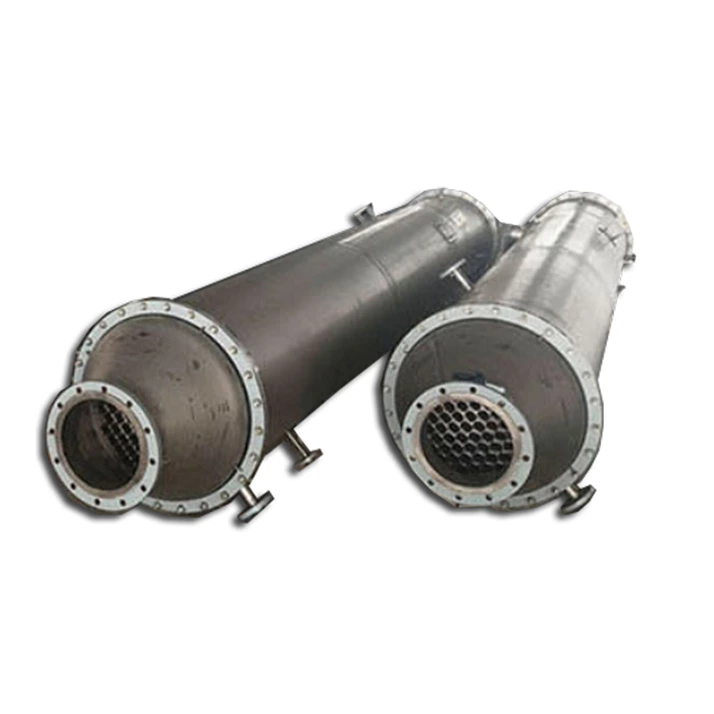
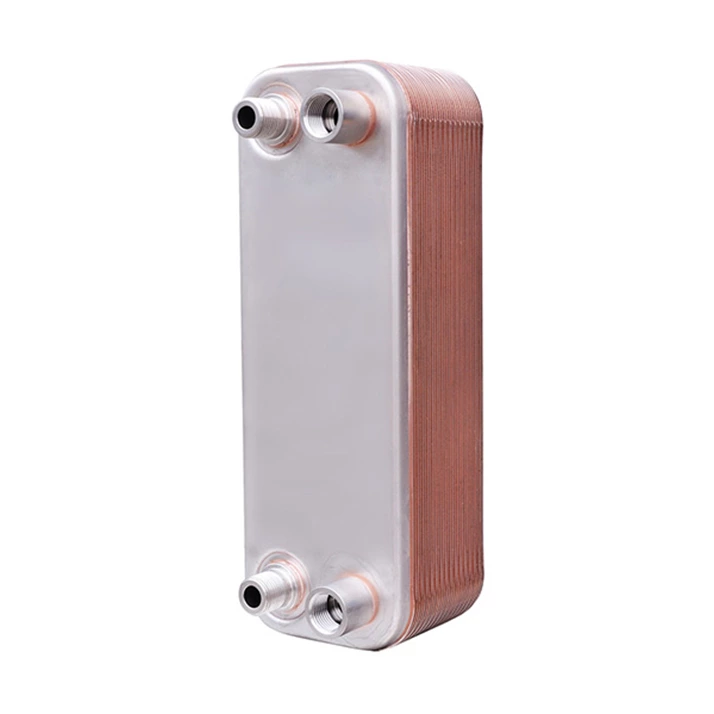
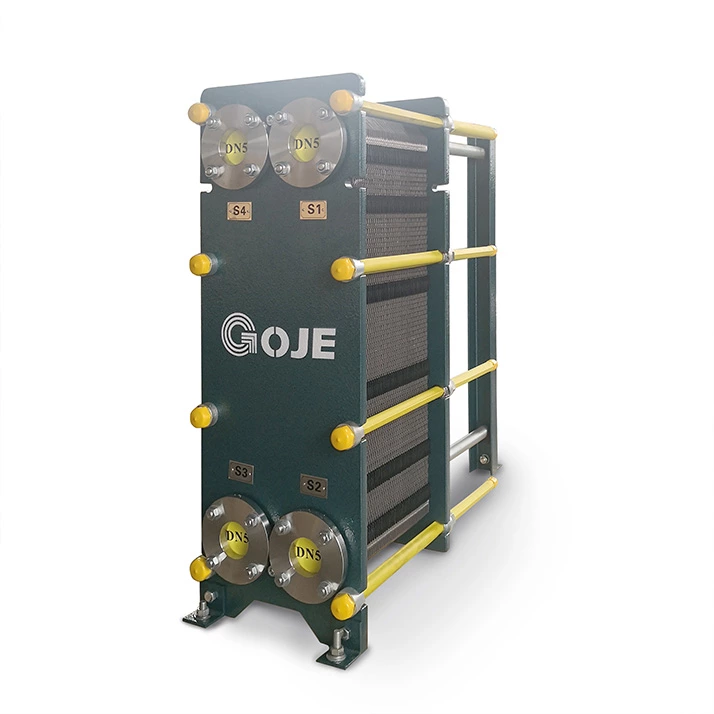
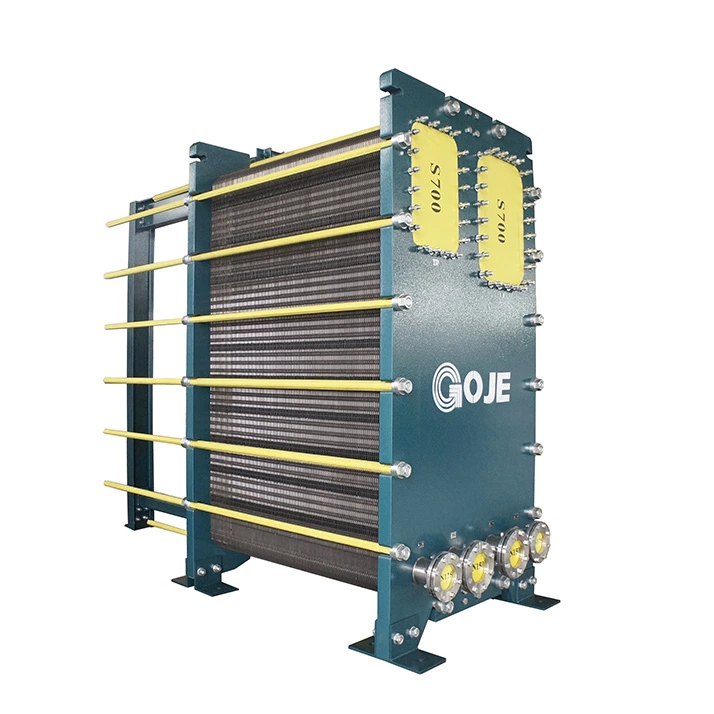
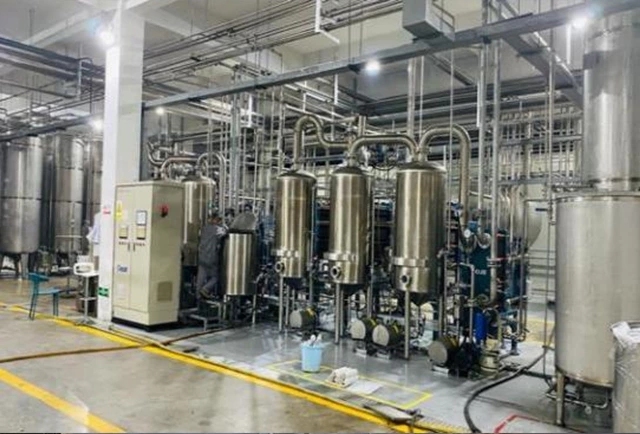
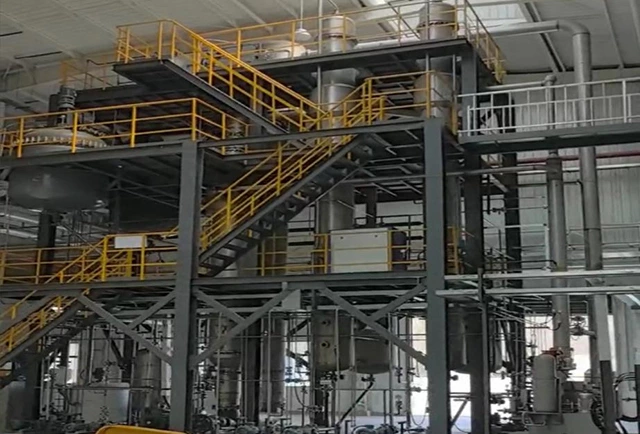
Zinc sulfate evaporation and concentration + cooling crystallization evaporator
Zinc sulfate is an inorganic compound with the chemical formula ZnSO4. It is a colorless or white crystalline powder, granules, or powder.
I. Uses of Zinc Sulfate
Zinc sulfate is mainly used as a raw material for producing pigments such as lithopone , zinc barium white , and other zinc compounds. It is also used as a nutrient for animals with zinc deficiency, a feed additive in livestock farming, a zinc fertilizer ( micronutrient fertilizer ) for crops, an important material for synthetic fibers, an electrolyte in the electrolytic production of metallic zinc , a mordant in the textile industry , an emetic in medicine, an astringent, a fungicide, and a preservative for wood and leather.
II. Material properties of zinc sulfate:
Zinc sulfate, with the chemical formula ZnSO4, is a colorless or white crystal, granule, or powder, odorless. It has a melting point of 100℃ and a bitter taste. Its density is 1.957 g/cm³ (25℃). It is readily soluble in water, and its aqueous solution is acidic; it is slightly soluble in ethanol and glycerol . Its pH is approximately 4.5. Zinc sulfate containing one molecule of water of crystallization does not easily clump; its relative density is 1.97, its melting point is 100℃, and it has an irritating odor.
三、Solubility of zinc sulfate:
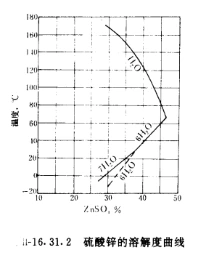
According to the solubility curve of zinc sulfate, zinc sulfate crystallizes into zinc sulfate heptahydrate when it is supersaturated at 30℃, into zinc sulfate hexahydrate when it crystallizes between 30℃ and 70℃, and into zinc sulfate monohydrate only when it is above 70℃. Therefore, the discharge temperature should not be less than 70℃ to avoid a large amount of water being carried away by the crystals. At the same time, considering that zinc sulfate crystallizes into supersaturated form at 30℃, there are crystals in the evaporation system.
四、Boiling point temperature rise of zinc sulfate solution:
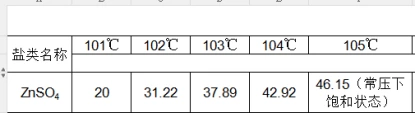
Based on the information regarding the boiling point of zinc sulfate, the boiling point elevation of zinc sulfate solution is not very high; under normal pressure and saturated concentration, the boiling point of zinc sulfate only increases by 5°C. Based on this temperature rise, either MVR evaporation or multi-effect evaporation can be selected.
五、Typical process flow
1. Preprocessing
The raw material solution (usually a solution containing 100-300 g/L of ZnSO₄ ) is first filtered and impurities are removed (such as removing heavy metal ions such as iron and manganese). If necessary, the pH is adjusted to 4-5 to avoid hydrolysis to form Zn(OH) ₂ .
If the solution contains chloride ions, dechlorination treatment is required to prevent corrosion of the equipment.
2. Evaporation and concentration (MVR evaporation system or multi-effect evaporation system)
Heating evaporates the water, increasing the solution concentration to saturation (approximately 60-70% ZnSO₄ , corresponding to a density of 1.5-1.6 g/cm³).
Key control point: Temperature should be controlled between 70-90℃ to avoid the dehydration of ZnSO₄·7H₂O into ZnSO₄ · H₂O ( monohydrate ) at high temperatures, which would affect the crystal morphology .
3. Crystallization separation
The concentrated supersaturated solution enters a crystallizer (such as an OSLO crystallizer or a DTB crystallizer) and is cooled to 30-40℃ to precipitate ZnSO₄ · 7H₂O crystals .
To produce zinc sulfate monohydrate (ZnSO₄ · H₂O ) , evaporation and crystallization are required at temperatures above 100°C .
4. Solid-liquid separation and drying
The crystals are separated by a centrifuge or filter, and the mother liquor is returned to the evaporation system for recycling.
The crystals are dried in a fluidized bed, cooled, and then packaged.
六、Main evaporation technologies
1. Multi-Effect Evaporation (MEE)
The most commonly used energy-saving technology typically employs 2-4 effects.
For example, in a triple-effect co-current evaporator, the temperature of the first effect is 90-95℃, and the temperature of the last effect is 70-75℃, so the steam consumption can be reduced to less than 1/3 of that of a single-effect evaporator.
Material selection: Super two-way stainless steel or titanium (for chloride ion corrosion).
2. Mechanical vapor recompression (MVR)
The high-efficiency and energy-saving technology uses a compressor to heat up and reuse secondary steam, which can save more than 50% energy compared to multi-effect evaporation.
Suitable for large-scale continuous production