Amino acid quadruple-effect evaporation concentration
Design Description:
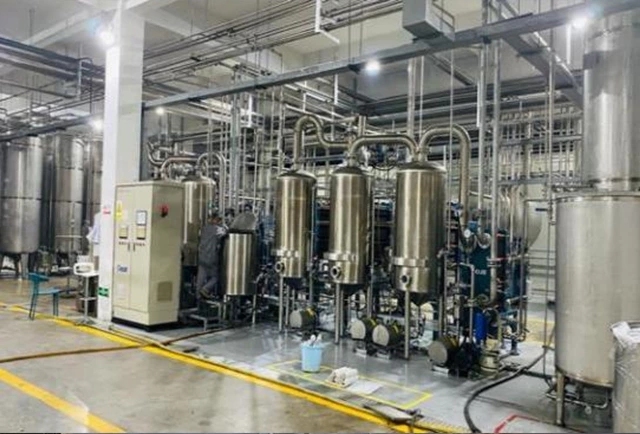
The customer provides a low steam price of 90 yuan /ton and a low electricity price of 0.5 yuan /ton . The feed volume of amino acid tail liquid is relatively large, and the boiling point elevation is low (1450 cubic meters/ hour). Considering factors such as energy consumption, investment, and manufacturer requirements , a four-effect falling film evaporation concentration method is used to concentrate 5% amino acids to 52% .
Design Features:
1. The equipment manufacturing process is mature, the output volume is large, and it has its own independent and mature processing workshop.
2. Utilizing multiple energy recovery heat exchangers to minimize energy consumption, three preheaters are added before entering the evaporation system to fully utilize the waste heat of secondary steam condensate and live steam condensate. The material then enters the live steam preheater to preheat it to approximately its boiling point temperature, ensuring a stable generation of secondary steam during the evaporation process and guaranteeing the evaporation capacity of the next effect. A water-ring vacuum pump is added later to ensure evaporation at a temperature below the atmospheric pressure boiling point, minimizing live steam consumption. (Energy Saving)
3. It adopts an advanced intelligent PLC control system, which saves manpower and can ensure continuous and stable system operation.
4. A baffle plate demister is installed in the separator to prevent liquid droplets from carrying away liquid. The demister separates the mist from the gas, ensuring that the concentration of amino acid material is not reduced and that the equipment is corrosion resistant.
5. Add flushing lines to multiple easily clogged pipelines to ensure normal system operation.
6. In the discharge unit, the density and concentration of the discharged liquid are precisely controlled using a densitometer and regulating valve to ensure the outlet concentration of the material. This eliminates the complexity of manual sampling and achieves the designated target more efficiently and intelligently.
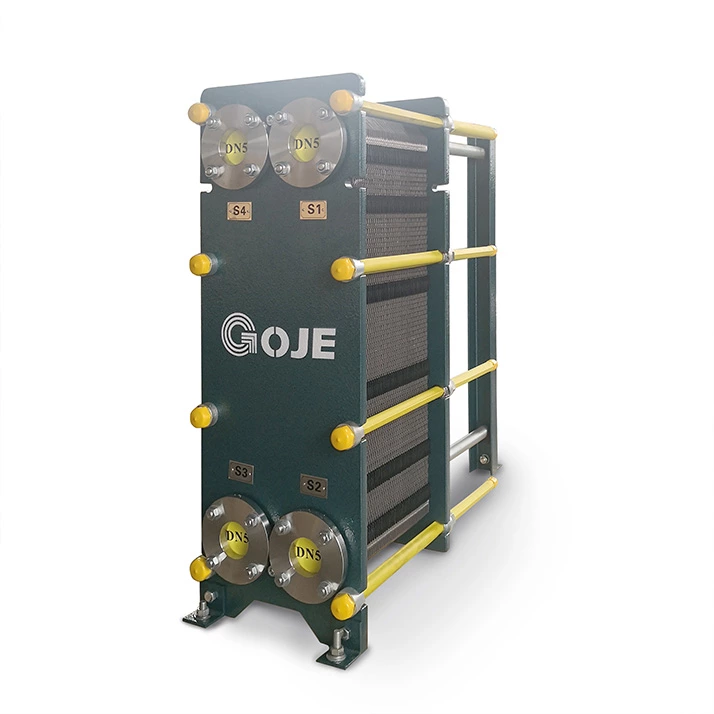
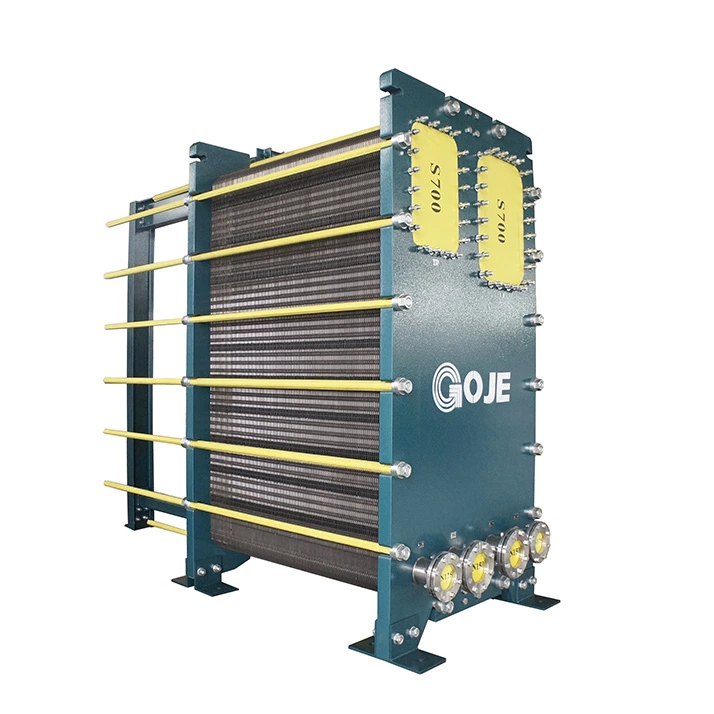
7. Our company uses professional plate evaporator calculation software to make the calculation results more accurate and can provide detailed parameters such as heat transfer temperature difference, heat transfer area, heat transfer coefficient, and pressure drop.
Process Introduction
Material flow: Raw material tank (owner) → Distilled water preheater → Condensate preheater → Live steam preheater → First-effect falling film evaporator → Second-effect falling film evaporator → Third-effect falling film evaporator → Fourth-effect falling film evaporator → Discharge liquid
Steam flow direction: Live steam → First-effect evaporator → Second-effect evaporator → Third-effect evaporator → Fourth-effect evaporator → Main condenser
Distilled water flow path: Double-effect heater → Triple-effect heater → Quadruple-effect heater/main condenser → Distilled water tank → Distilled water pump → Distilled water preheater → Reuse/Discharge
Condensate flow direction: Single-effect heater → Condensate tank → Condensate pump → Condensate preheater → Reuse/discharge
1)The amino acid solution in the raw material tank is first pumped to the distilled water preheater for heat exchange, then enters the condensate preheater for further preheating, and then enters the live steam preheater to be preheated to the required temperature before entering the first- effect evaporator .
2)After preheating, the liquid enters the first-effect falling film evaporator . It is then pumped into the falling film heater and flows downward in a thin film through the liquid receiving pan and distributor. After being heated by the steam outside the heating tube, the liquid is evaporated and concentrated. The mixture of the liquid and steam enters the second-effect separator through the lower chamber of the heater to achieve gas-liquid separation. The concentrated liquid is transferred to the third-effect evaporator by the second-effect circulating pump for further evaporation and concentration. The liquid is then transferred to the next effect evaporator for further concentration by the circulating pump. Finally, the concentrated liquid is discharged from the fourth effect system.
3)The amino acids are concentrated by evaporation in the system . The concentration of amino acids is determined by a densitometer installed on the reflux pipe, which is interlocked with a regulating valve. Once the set value is reached, the regulating valve controls the discharge.
4)The steam generated by the first-effect separator is used as the heat source for the second-effect heater. The secondary steam generated by the second-effect separator enters the next-effect heater as a heat source to heat the material . The secondary steam generated by the third-effect separator also enters the next-effect heater as a heat source to heat the material . The secondary steam in the fourth-effect separator enters the main condenser and is condensed by cooling water. After condensation, the secondary steam forms condensate, which is collected in a distilled water tank and pumped to the distilled water preheater.
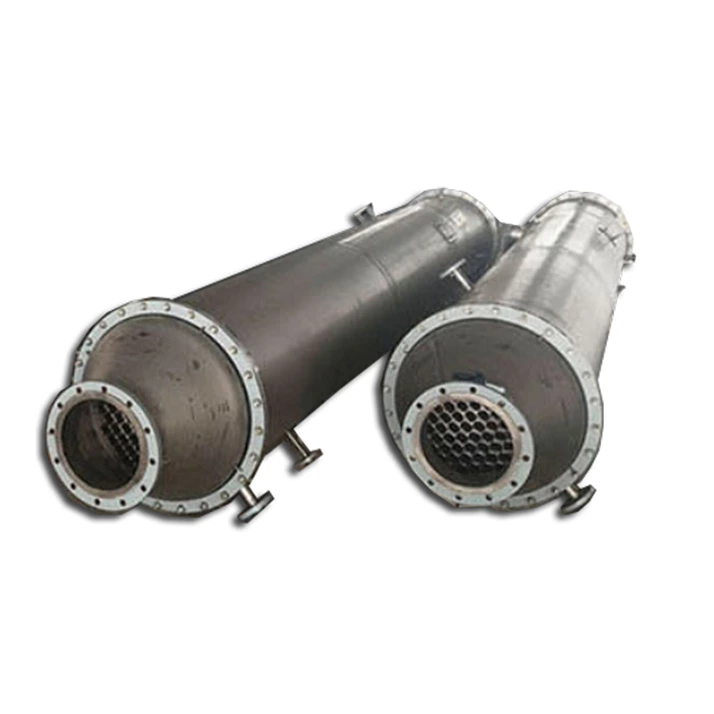
5)To ensure evaporation occurs at low temperatures, the system requires a vacuum pump system. The raw materials contain dissolved oxygen and volatile components, and the system contains a small amount of non-condensable gases. These gases cannot be condensed in the shell-and-tube heat exchanger; if they are not discharged, the heater pressure will increase, leading to increased system energy consumption. The gases are discharged from the shell side of the heat exchanger, enter the vacuum system, and are then discharged outside the system .
Equipment footprint
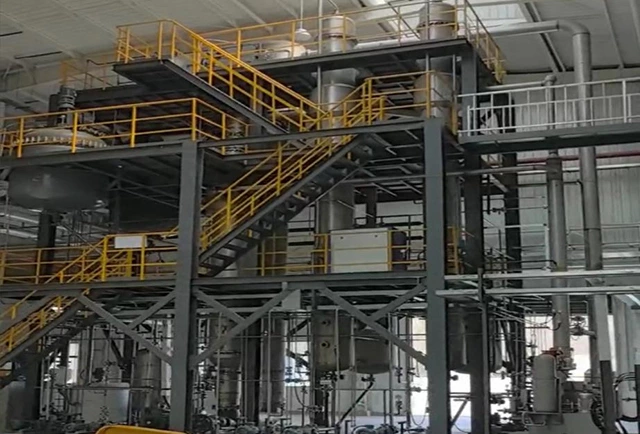
Length × Width × Height = 18m × 8m × 17.5m (estimated area, subject to adjustment)