Fenton + Evaporation: The Golden Combination for Solving the "High Salt and High Pollution" Problem of Desulfurization Wastewater
Desulfurization wastewater, a core byproduct of desulfurization systems in industries such as thermal power, chemical, and metallurgy, is becoming a major obstacle to achieving environmental emission standards for enterprises. Its multiple characteristics—high COD (3000-20000 mg/L) , high salinity (TDS 30000-60000 mg/L) , high sulfate, and high levels of recalcitrant organic matter and heavy metals—frequently cause traditional treatment processes to fail, and evaporation systems struggle due to scaling, clogging, and corrosion. Today, we reveal how the Fenton oxidation + evaporation crystallization combined process can break the deadlock of "zero discharge" of desulfurization wastewater, focusing on the core value and practical points of the Fenton process to provide reliable support for its implementation.
- Desulfurization wastewater: A direct look at the industry's pain points
Desulfurization wastewater (especially wastewater generated by limestone-gypsum desulfurization) is far more complex than ordinary industrial wastewater, mainly in the following ways:
1. Organic "fortresses" are difficult to overcome: These contain aromatic compounds, heterocyclic compounds, and other substances that are difficult to degrade biodegrade. The B/C ratio is usually <0.25, resulting in extremely low biochemical treatment efficiency. Conventional processes are unable to achieve COD standards.
2. The "Double Shackles" of Salt and Sulfate: High concentrations of chloride ions, sulfate ions, and calcium ions not only inhibit microbial activity but also lead to severe scaling in the evaporation system (hard scale such as calcium sulfate and calcium fluoride), causing a sharp drop in heat exchange efficiency of 30%-50% and accelerated equipment wear.
3. Hidden Dangers of Heavy Metals: Containing heavy metals such as mercury, cadmium, lead, and arsenic, if not thoroughly treated, can cause water and soil pollution, leading to strict environmental penalties.
4. The "curse" of concentrated wastewater is hard to break: The concentrated wastewater produced by traditional membrane treatment (accounting for 20%-40% of the influent ) is highly enriched with salt and pollutants. Reinjection will cause system imbalance, while discharge will fail to meet environmental standards.
Traditional treatment methods (biochemical + membrane) suffer from two major drawbacks: frequent membrane fouling (reducing cleaning cycles to 1-2 months) and incomplete disposal of the concentrate. Meanwhile, single evaporation processes suffer from high operating costs due to organic matter coking and scaling, calcium salt crystallization and blockage, and heavy metal corrosion, making them a "hot potato" in the industry. Choosing specialized evaporation equipment is key to overcoming this predicament. Jiangsu Gaojie Energy-Saving Equipment Group Co., Ltd. has been deeply involved in the evaporation field for many years, and its equipment can effectively meet the treatment needs of desulfurization wastewater with high salinity, high corrosion, and high scaling.
- Fenton process: A powerful oxidizing tool for overcoming recalcitrant pollutants in desulfurization wastewater.
1. Core Principle: The "Indiscriminate Attack" of Hydroxyl Radicals
Fenton process , discovered by British chemist H.J.H. Fenton in 1894 , has become a core representative of advanced oxidation technologies after a century of development, especially suitable for the water quality characteristics of desulfurization wastewater, which is highly recalcitrant and contains high levels of heavy metals. Its reaction mechanism is as follows:
Under acidic conditions of pH 2.5-3.5 , ferrous ions (Fe²⁺) catalyze a chain reaction of hydrogen peroxide (H₂O₂) to generate hydroxyl radicals (·OH) with extremely strong oxidizing power and a redox potential as high as 2.8V (second only to fluorine). These radicals can non-selectively attack most organic pollutant molecules in wastewater, decomposing complex organic matter into smaller molecules through electron transfer, addition reactions, and even completely mineralizing them into CO₂ and H₂O . At the same time, the Fe(OH) ₃ colloids generated during the reaction can efficiently adsorb heavy metal ions in wastewater, achieving simultaneous removal of organic matter and heavy metals.
Core reaction equation:
Fe²⁺ + H₂O₂ → Fe³⁺ + OH⁻ + ·OH (First-order reaction)
Fe³⁺ + H₂O₂ → Fe²⁺ + OOH· + H⁺ (Second-order reaction, realizing the Fe²⁺ cycle)
·OH + organic matter → oxidative decomposition products + CO₂ + H₂O
2. Process Flow: Precisely Controlled "Four-Stage" Operation
| Process Stage | Core Operations | Control parameters | Key role |
| pH adjustment | Add sulfuric acid/hydrochloric acid | pH = 2.5-4.0 (precise control) | To create the optimal acidic environment for the Fenton reaction, preventing premature precipitation of Fe(OH)₃, and to adapt to the low alkalinity characteristics of desulfurization wastewater. |
| Drug dosing | Simultaneous addition of FeSO₄·7H₂O and H₂O₂ | Fe²⁺:H₂O₂ molar ratio = 1:3-1:10, total dosage:COD = 1:1-3:1 | Ensure sufficient ·OH is generated to suit the characteristics of desulfurization wastewater, which has high COD and recalcitrant organic matter, and simultaneously enhance the adsorption of heavy metals. |
| Reaction phase | Mechanical stirring (200-300 rpm) | Reaction time = 60-90 min | Ensuring sufficient contact between OH radicals and organic matter and heavy metals enhances oxidation and adsorption effects, thus solving the problem of difficult removal of pollutants from desulfurization wastewater. |
| Neutralization and precipitation | Add NaOH/lime slurry | pH = 7.5-8.5, precipitation time = 30-60 min | This process generates Fe³⁺ into Fe(OH)₃ colloid, which adsorbs residual organic matter and heavy metals, while simultaneously improving the pH level to adapt to subsequent evaporation processes, thus laying the foundation for the stable operation of the evaporation equipment. |
Fenton treatment systems for desulfurization wastewater must take into account its characteristics of high salinity, high heavy metal content, and low alkalinity, and follow the standardized procedures outlined below to ensure a balance between treatment effectiveness and cost:
3. Key parameter optimization: Dedicated solution for desulfurization wastewater
Given the unique characteristics of desulfurization wastewater (low alkalinity, high salinity, high heavy metals, high sulfate), the Fenton process requires customization of the following parameters to ensure a balance between treatment effectiveness and economic efficiency:
- Reagent ratio: For high COD desulfurization wastewater (COD>8000mg/L), Fe²⁺:H₂O₂=1:5 is used , and the COD removal rate can reach 60%-80%, and the heavy metal adsorption rate can reach more than 95%;
- Reaction temperature: The temperature of desulfurization wastewater is usually 30-40℃, which does not require additional heating. This temperature range can accelerate the Fenton reaction and shorten the reaction time by 20%-30%, which is suitable for on-site working conditions.
- Catalyst selection: Iron-carbon micro-electrolysis + Fenton combination can be used to reduce COD and remove some heavy metals by pretreatment with iron-carbon micro-electrolysis, while providing Fe²⁺ , reducing the amount of reagent added by 30% and reducing the treatment cost;
- Sludge treatment: Fenton sludge (containing Fe(OH)₃ ) can be returned to the front-end equalization tank, where some Fe³⁺ is reduced to Fe²⁺ in an acidic environment , realizing catalyst recycling and reducing sludge production and disposal costs.
- Fenton + Evaporation: A Synergistic Effect of Processes (1+1>2)
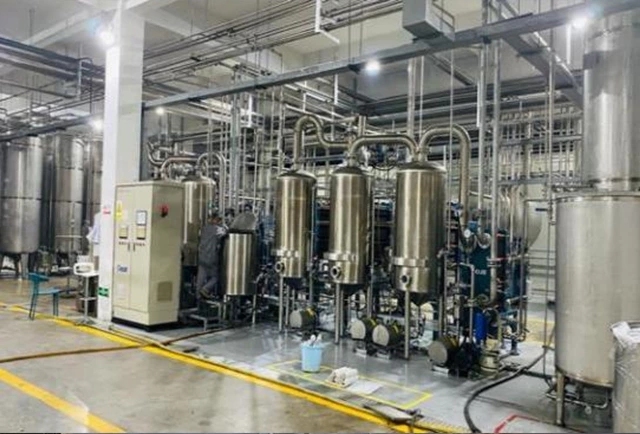
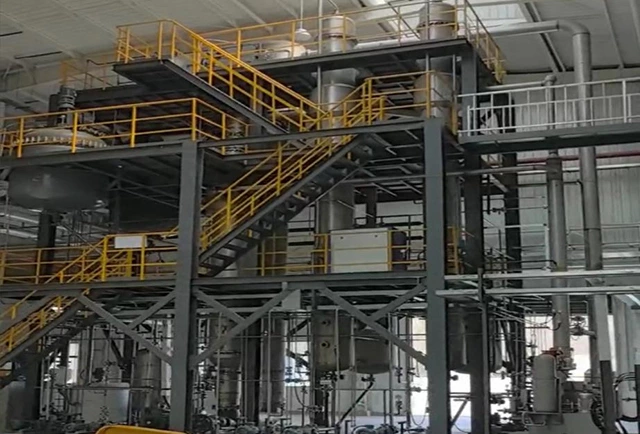
The combination of Fenton process and evaporation crystallization is not a simple addition, but a golden partnership of pretreatment and advanced treatment, perfectly solving the shortcomings of single processes. Fenton tackles the problems of organic matter and heavy metals, while evaporation solves the problems of high salt content and concentrated liquid disposal. The evaporation stage utilizes equipment from Jiangsu Gaojie Energy-Saving Equipment Group Co., Ltd., maximizing the synergistic value of the processes. As a high-tech enterprise with 30 years of experience in the energy-saving equipment field, Jiangsu Gaojie focuses on the research, development, production, installation, and commissioning of MVR evaporation crystallization and multi-effect evaporation equipment. It can provide customized solutions for desulfurization wastewater treatment, and its equipment, with its advantages of corrosion resistance, energy saving, and stability, has become the preferred choice for zero-discharge desulfurization wastewater projects.
1. Process route design
Desulfurization wastewater → Pretreatment (bar screen + equalization tank) → Fenton oxidation → Neutralization precipitation → Filtration → Jiangsu Gaojie MVR evaporation crystallization equipment → Condensate discharge/reuse in compliance with standards → Safe disposal of crystallized salt
2. Core Value of Collaboration: Safeguarding Evaporation
| Fenton process function | Improvement effect on evaporation system | Economic benefits |
| Decomposition of macromolecular organic matter | Eliminates organic carbonization and scaling during evaporation, improves heat exchange efficiency, and avoids the risk of sulfate scaling. | Extending the cleaning cycle by one month reduces cleaning costs and minimizes downtime losses. |
| Removal of colloids and suspended solids | Reduce evaporation equipment clogging and wear, extend equipment lifespan by utilizing high-quality materials, and adapt to the high suspended solids characteristics of desulfurization wastewater. | Extended evaporation system lifespan and reduced maintenance costs |
| Reduce COD load | Condensate COD discharge is more stable and accurate. | Avoid secondary treatment and save on end-of-pipe treatment investment |
| Simultaneous removal of heavy metals | Eliminates heavy metal corrosion of the evaporation system, protects core components of the evaporation equipment, reduces equipment failures, and is suitable for the high heavy metal characteristics of desulfurization wastewater. | Reduce equipment replacement frequency and lower operational risks and maintenance costs. |
3. Recommendations for adapting evaporation processes
We prioritize the MVR (Mechanical Vapor Recompression) evaporation equipment from Jiangsu Gaojie Energy-Saving Equipment Group Co., Ltd. Based on internationally leading MVR evaporation and crystallization technology, it reduces energy consumption by 70%-80% compared to traditional multi-effect evaporation. It is suitable for treating high-salt, high-energy-consumption desulfurization wastewater and can be customized to meet the high sulfate and high-chlorine characteristics of desulfurization wastewater. It is resistant to high-salt and high-corrosion conditions and has passed multiple certifications, ensuring better quality and after-sales service.
- The core advantages of the Fenton + evaporation combination
1. Completely break the "concentrate curse": achieve "zero discharge" of desulfurization wastewater, help enterprises reuse resources, and meet environmental protection policy requirements.
2. Simultaneous compliance with COD and heavy metal standards: The synergistic effect of Fenton oxidation and evaporation crystallization ensures that the COD of the effluent is consistently lower than the national emission standards, far exceeding the requirements of the "Technical Specification for Treatment of Limestone-Gypsum Wet Desulfurization Wastewater from Thermal Power Plants".
3. "Easy to handle" water quality fluctuations: The Fenton process is highly adaptable to fluctuations in influent COD and heavy metals, and is well-suited to the characteristics of large fluctuations in desulfurization wastewater from industries such as thermal power and chemical processing. Its customized adaptability allows it to flexibly respond to water quality fluctuations and ensure stable system operation.
4. Avoid the risk of sulfate scaling: Fenton pretreatment removes some calcium ions, and combined with the anti-scaling design of the evaporation equipment, it completely solves the problem of sulfate scaling in desulfurization wastewater, avoids equipment blockage, reduced thermal efficiency and other problems, and reduces the difficulty of operation and maintenance.
5. Simplified Operation and Maintenance: Compared to membrane systems, the Fenton + evaporation combination process is highly automated and easy to operate, eliminating the need for frequent membrane element replacements. Jiangsu Gaojie Evaporation Equipment is equipped with an advanced automated control system that enables one-button start/stop and unattended operation, reducing maintenance personnel by 30%+. It also provides 24-hour online after-sales response to prevent downtime losses.
- Choice is more important than effort; craftsmanship determines success or failure.
Desulfurization wastewater treatment can no longer rely on piecemeal solutions. The Fenton + evaporation combined process addresses the challenges of organic matter and heavy metals through Fenton extraction, while evaporation solves the problems of high salinity and concentrated liquid disposal. Combined with professional evaporation equipment from Jiangsu Gaojie Energy-Saving Equipment Group Co., Ltd., it achieves a synergistic effect greater than the sum of its parts. Jiangsu Gaojie, a high-tech enterprise integrating R&D, design, production, installation, and commissioning, boasts experience in dozens of industries and hundreds of successful cases, providing comprehensive and customized evaporation treatment solutions. It is one of the optimal solutions for "zero discharge" of desulfurization wastewater. Its equipment is not only suitable for desulfurization wastewater but also widely used in the treatment of high-salinity wastewater in chemical, metallurgical, and dyeing industries, helping enterprises achieve a win-win situation for both environmental protection and economic benefits.
If you are facing challenges in treating desulfurization wastewater, or would like to learn about specific parameter optimization schemes for the Fenton process and the compatibility details of Jiangsu Gaojie evaporation equipment, please contact Gaojie's technical team. We can help you easily overcome the "high salt and high pollution" dilemma of desulfurization wastewater, and achieve the dual goals of environmental compliance and energy saving and cost reduction by relying on professional processes and high-quality equipment!