MVR evaporation zero-discharge system for desulfurization wastewater in power plants
1. Power plant desulfurization wastewater is characterized by high salt, high chloride ion, and heavy metal content, making it difficult to achieve discharge standards using traditional treatment methods. Jiangsu Gaojie Group's MVR (Mechanical Vapor Recompression) zero-emission evaporation system utilizes heat energy recycling to evaporate and separate water from the wastewater, crystallizing recyclable salts to achieve near-zero wastewater discharge. The core of this system lies in using a compressor to heat and pressurize low-temperature secondary steam and reuse it as a heat source, significantly reducing dependence on external steam.
From a technical perspective, MVR systems offer advantages such as low energy consumption, stable operation, and a high degree of automation. Compared to multi-effect evaporation, their unit energy consumption can be reduced by more than 30%, making them particularly suitable for small to medium-scale wastewater treatment scenarios. The systems are typically equipped with automatic cleaning and anti-scaling designs to effectively address the issue of calcium and magnesium ions easily forming scale in desulfurization wastewater, ensuring long-term continuous operation.
In practical applications, MVR evaporation systems have been successfully put into operation in several coal-fired power plants. For example, in a 300MW unit desulfurization wastewater treatment project, with a daily treatment capacity of 200 tons, the condensate is recycled into the circulating cooling system after treatment by the MVR system, and the crystallized salt meets industrial salt standards, achieving resource utilization. This system significantly reduces the environmental pressure of wastewater discharge.
With increasingly stringent environmental policies, the demand for zero wastewater discharge in the thermal power industry is becoming increasingly urgent. MVR technology, due to its flexibility and cost-effectiveness, has become one of the mainstream solutions. Future development directions include coupling with membrane separation, advanced oxidation, and other processes to improve system adaptability and treatment depth, while reducing investment and operation and maintenance costs.
The MVR (Medium-Voltage Reduction) evaporation zero-emission system not only solves the problem of power plant desulfurization wastewater treatment but also provides a replicable technological path for the treatment of high-salinity wastewater. It has enormous potential for application in energy, chemical, and other fields, and is a key technological support for promoting the resource utilization of industrial wastewater and the development of a circular economy.
2. Zero wastewater discharge technology contributes to the green development of the power industry.
The treatment of high-salinity wastewater in power generation has always been a major challenge in environmental protection and resource recycling. This type of wastewater mainly originates from flue gas desulfurization, chemical cleaning, and cooling systems in coal-fired power plants. High-salinity wastewater is characterized by its high salt content (typically TDS ≥ 10,000 mg/L), which not only increases the difficulty of conventional biological treatment but also causes equipment corrosion and increased treatment costs. Furthermore, heavy metals and organic matter in the wastewater must be rigorously removed to prevent secondary pollution of the environment.
In response to the unique characteristics of high-salinity wastewater from power plants, the zero-discharge wastewater treatment process integrates a treatment flow consisting of a Wastout pretreatment system, a Neterfo extreme separation system, and an MVR evaporation system. This not only overcomes the limitations of traditional treatment methods but also demonstrates its dual advantages of being environmentally friendly and economically feasible in practice.
As the cornerstone of the entire process, the pretreatment system first performs meticulous classification and grading treatment on the high-salinity wastewater entering the system. This system utilizes advanced physical and chemical pretreatment technologies to effectively remove suspended solids, oils, and some heavy metals from the wastewater, significantly reducing the burden on subsequent treatment processes. During the pretreatment process, the precise identification and separation of different pollutants lays a solid foundation for subsequent advanced treatment.
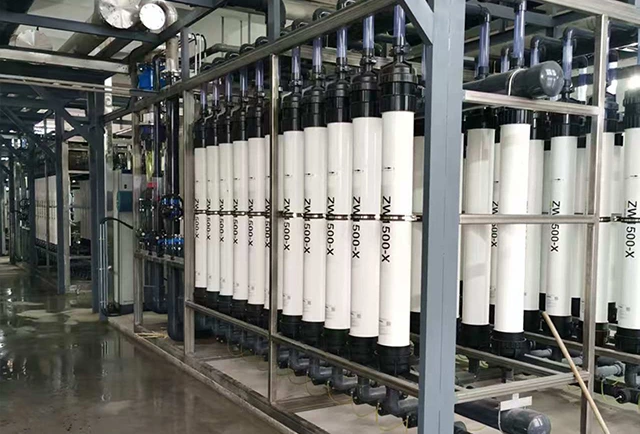
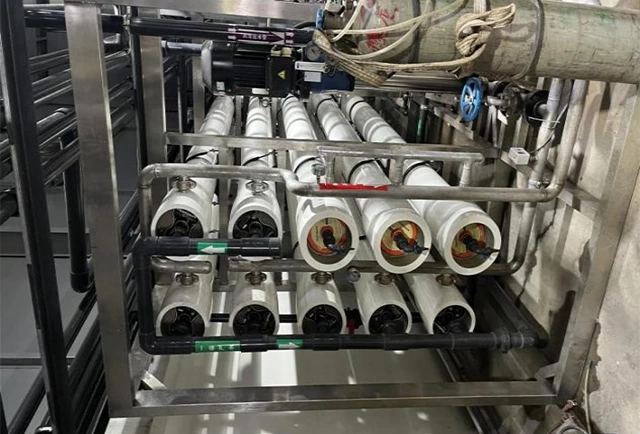
Following this, the extreme separation system further enhances wastewater treatment with its superior separation performance. This system integrates multiple advanced technologies, including large crossflow PON antifouling technology and POM wide-channel viaduct technology, effectively solving challenges in treating high-salt, high-hardness wastewater, such as membrane fouling and scaling. By employing high-performance antifouling membrane elements, it not only achieves deep purification of wastewater but also elevates the membrane system's recovery rate to new heights, significantly reducing wastewater volume and creating conditions for resource recycling.
The MVR (Mechanical Vapor Recompression) evaporation crystallization technology designed by Jiangsu Gaojie Group serves as the final stage of wastewater treatment. Through mechanical vapor recompression, it efficiently concentrates dissolved solids in wastewater, achieving complete treatment and near-zero discharge of high-salinity wastewater. This system significantly reduces energy consumption while decomposing the concentrated water into pure distilled water and dried solid waste. The former can be used as boiler feedwater, while the latter is disposed of harmlessly or utilized as a resource, depending on its properties. The MVR system, with its remarkable energy-saving effect, is a highlight of the overall process's economic and environmental benefits .