Research on Wastewater Treatment in the Pesticide Industry
I. Industry Challenges and Technological Needs
As a crucial branch of fine chemicals, the pesticide industry, while ensuring global food security, has also become a major source of environmental pollution due to the high concentrations of wastewater generated during its production processes. Pesticide wastewater typically contains high concentrations of organic matter (COD reaching 10,000-50,000 mg/L), high salinity (TDS content 30,000-200,000 mg/L), and toxic and harmful substances such as anilines, pyridines, and heavy metals, exhibiting strong biotoxicity, recalcitrant degradation, and complex composition. Traditional biochemical treatment processes are ineffective due to the high salinity and toxicity of the wastewater, while evaporation technology, with its highly efficient separation capabilities of salt and organic matter, has become a core technological support for solving the pesticide wastewater treatment problem and promoting the industry's green transformation.
With the continuous tightening of environmental protection policies such as the "Water Pollution Prevention and Control Action Plan," pesticide companies face the dual pressure of achieving compliant wastewater discharge and resource recovery. Statistics show that my country's pesticide industry generates over 200 million tons of wastewater annually, of which approximately 30% is directly discharged due to the difficulty of treatment, causing serious damage to aquatic ecosystems. Evaporation technology can not only reduce the volume of pesticide wastewater but also recover resources such as salts and organic solvents from the wastewater, constructing a closed-loop model of "wastewater treatment - resource recovery - production reuse," bringing significant environmental and economic benefits to enterprises.
II. Principles and Advantages of Evaporation Technology
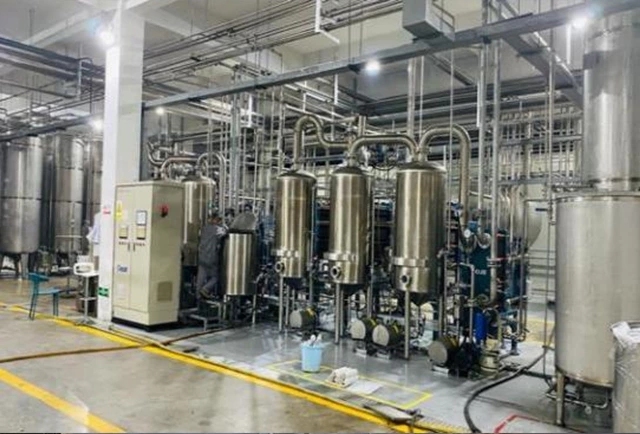
Mechanical vapor recompression (MVR) evaporation technology is one of the mainstream technologies for treating high-salinity pesticide wastewater. This technology uses a steam compressor to compress and heat the secondary steam generated during wastewater evaporation, allowing it to be reinjected into the evaporator as a heat source, achieving heat energy recycling with a recovery rate exceeding 95%. Compared to traditional multi-effect evaporation, MVR technology consumes only 30-50 kWh of electricity per ton of water, reducing operating costs by 30%-50%. It can also operate under mild conditions of 80-100℃, avoiding the decomposition of heat-sensitive pesticide intermediates and reducing wastewater corrosion of the equipment.
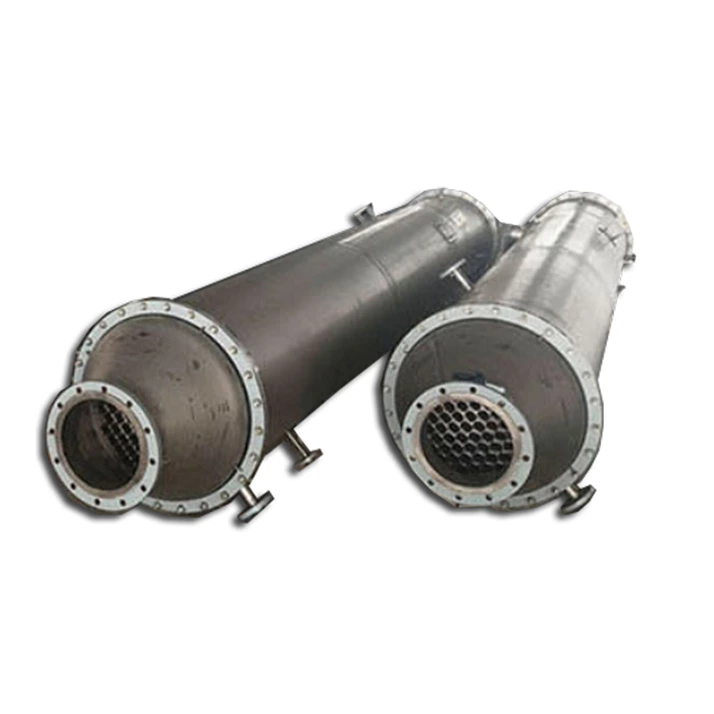
Multi-effect evaporation technology connects multiple evaporators in series, utilizing the secondary steam from the previous effect to provide a heat source for the next effect. By repeatedly utilizing the latent heat of steam, the consumption of fresh steam is significantly reduced. Addressing the characteristic of fluctuating composition in pesticide wastewater, multi-effect evaporation systems can flexibly adapt to different water quality treatment needs by adjusting the number of effects and operating parameters. Salt removal rates can reach over 97%, making it particularly suitable for large-scale centralized treatment of pesticide wastewater. In an application at a pesticide factory in Jiangsu, the multi-effect evaporation system concentrated 800 tons of wastewater per day with a COD as high as 25,000 mg/L, achieving a salt crystallization purity >98% and a condensate reuse rate of over 95%.
III. Application and Practical Results
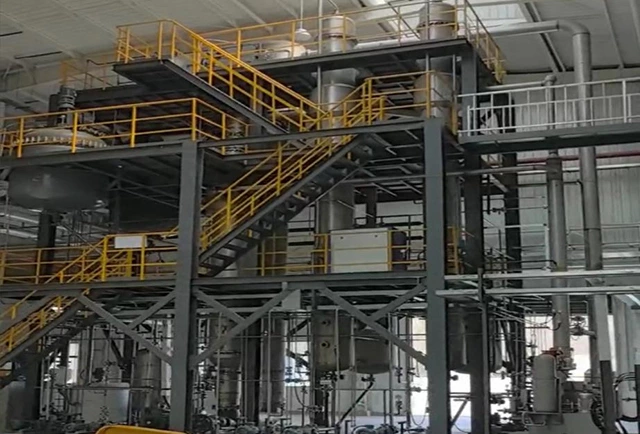
Jiangsu Gaojie successfully solved the problem of traditional biochemical processes failing to meet standards by using a "alkali chlorination to break down cyanide - evaporation and concentration - MVR crystallization - mother liquor reuse" process to treat wastewater at a large organophosphorus pesticide production enterprise in Jiangsu. This process first completely decomposes cyanide in the wastewater through sodium hypochlorite oxidation, followed by preliminary concentration using multi-effect evaporation. The core unit, the MVR evaporator, utilizes secondary steam compression for heating, significantly reducing energy consumption. Finally, industrial-grade NaCl crystals (purity >98%) are precipitated and sold externally. The condensate is then deeply treated by RO and reused in the circulating cooling system. After the project was implemented, the wastewater reuse rate reached over 95%, reducing fresh water consumption by 150,000 tons annually, reducing solid waste by 90%, and generating approximately 2 million yuan in revenue annually from the recovered salt, becoming a "zero-emission" benchmark in Zhejiang Province's pesticide industry.
Jiangsu Gaojie has implemented a skid-mounted low-temperature drying unit for treating high-concentration sodium chloride wastewater at an abamectin production plant in Inner Mongolia. This effectively solves the problems of easy crystallization and pipe blockage, as well as severe equipment corrosion, associated with traditional evaporation processes. The unit uses a Miller plate jacketed heat exchanger, maintaining a vacuum of -95 to -97 kPa within the evaporation chamber and controlling the evaporation temperature between 40 and 45°C. Uniform heating is ensured by a spiral scraper, and a stirring shaft further enhances the heat exchange effect. After implementation, the project not only achieved the requirement of concentrating methanol solvent to 30%-40% for reuse but also realized solid-liquid separation of the high-salt wastewater, with the salt residue having a moisture content of <15%. This significantly reduces the cost per ton of water treated, and the high degree of automation eliminates the need for additional manual labor.
IV. Technological Challenges and Innovation Directions
Evaporation technology faces the core challenges of scaling and corrosion in pesticide wastewater treatment. Calcium and magnesium ions and organic matter in the wastewater easily form a hard scale layer on the heating surface, reducing heat transfer efficiency, while high concentrations of chloride ions can cause severe corrosion to the equipment. To address this issue, the industry employs various methods, including chemical scale prevention (adding scale inhibitors such as polyphosphates and polyacrylic acid), physical scale prevention (using forced circulation pumps to maintain high flow rates to flush the pipe walls), and regular chemical cleaning. Simultaneously, corrosion-resistant materials such as titanium and 2205 duplex stainless steel are used in equipment selection, effectively extending the equipment's service life.
Future pesticide wastewater evaporation treatment technologies will develop towards coupling, intelligence, and greening. In terms of high-performance coupling technology, combining high-performance MVR with advanced oxidation technologies such as electrocatalytic oxidation and ozone catalytic oxidation can deeply degrade recalcitrant organic matter in the concentrate; when used in conjunction with membrane separation (such as DTRO), it can achieve salt-nitrate separation and concentration. Regarding intelligent optimization, AI algorithms can predict scaling trends and dynamically adjust operating parameters; digital twin technology can simulate the evaporation process and optimize heat energy distribution. In terms of green design, the integration of technologies such as solar-assisted heating and waste heat recovery from the reactor will further reduce the overall energy consumption of the evaporation system, promoting the transformation of the pesticide industry towards a low-carbon circular economy model.