RO concentrated brine treatment
RO concentrated brine is a high-salt byproduct produced after water separation and purification in the reverse osmosis process. The core objective of its treatment is to improve water resource reuse rate, reduce end-of-pipe treatment costs, and achieve environmentally compliant discharge. Its technical approach has always revolved around the development direction of "prioritizing concentration and volume reduction, with end-of-pipe evaporation as a backup".
- The core processing logic
of reverse osmosis is to use the selective permeability of the membrane to remove salt impurities. Therefore, the produced concentrate has the characteristics of high salt content (TDS is usually between 3000mg/L and 80000mg/L), poor biodegradability, and easy scaling. It cannot be directly discharged or biologically treated. It must first be concentrated to further reduce the water volume, and then the high-concentration effluent must be finally treated. - Mainstream technical route
(1) Membrane concentration process (mainstream pretreatment scheme)
further recovers fresh water through membrane separation, reducing the volume of high-salt concentrated water by 30%~70%, and significantly reducing subsequent evaporation costs:
- Traditional two-stage RO concentration: Conventional RO membranes can only concentrate the TDS of the concentrate to 60~80g/L, which is suitable for small and medium-sized projects with low requirements for zero emissions. The investment cost is low, but the concentration ratio is limited.
- Ultra-high pressure RO (DuPont XC120): Designed specifically for high-salt concentrates, it can concentrate the TDS of concentrates to over 120g/L, directly reducing the amount of water entering the evaporation unit by nearly 50%. Large-scale zero-discharge projects can reduce the cost per ton of treatment by about 45%, and it is the direction of technological iteration in recent years.
- DTRO/STRO: Disc tube/mesh tube membrane elements with wide flow channels and strong anti-fouling ability. They can treat high turbidity and high organic matter concentrates without complex pretreatment and are mostly used for the concentration of landfill leachate and difficult-to-degrade chemical concentrates.
- Electrodialysis: Desalination relies on potential difference, with a high concentration ratio and a concentrate recovery rate of over 85%. It can also remove about 40% of COD, making it suitable for treating high-salt concentrate in coal chemical and electroplating industries. However, it has relatively high power consumption.
(2) Evaporation crystallization process (end-of-pipe zero emission catch-up)
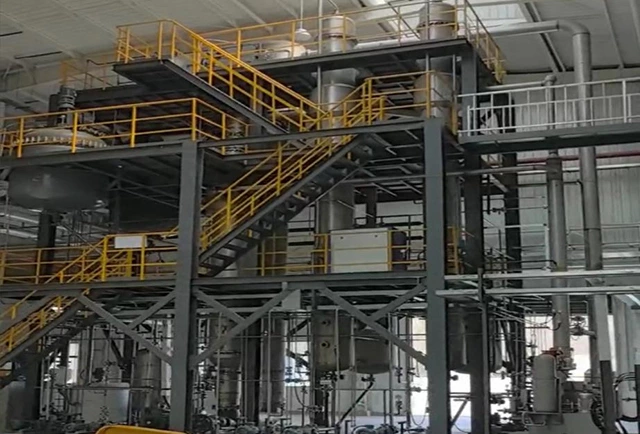
The highly concentrated brine, after being concentrated through a membrane, is ultimately separated into water and salt through evaporation, achieving zero liquid discharge.
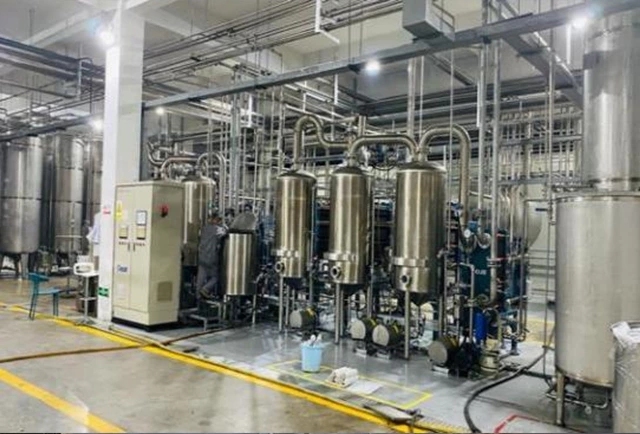
- MVR evaporation: It recovers the heat energy of secondary steam through a compressor for reuse. Theoretically, its energy consumption is only 30% to 50% of that of traditional multi-effect evaporation. It is suitable for large-scale projects that pursue low operating energy consumption. The core cost depends on the compressor efficiency and the system's anti-scaling design.
- Multi-effect evaporation: This method utilizes steam heat energy through multiple evaporators connected in series. The system operates stably and reliably, but its energy consumption is high, requiring an external steam heat source. It is suitable for scenarios where heat source costs are controllable.
The core challenge of the evaporation process is that the high salinity of the concentrate makes it prone to scaling and pipe blockage. Therefore, it is essential to use softening pretreatment and employ forced circulation, wide flow channel design, or corrosion-resistant alloy materials to ensure long-term operation.
(3) Other combined processes
For small and medium-sized projects or concentrated water with relatively simple water quality, the "activated carbon adsorption + membrane concentration + evaporation pond" solution can also be adopted: activated carbon adsorption removes more than 60% of organic matter, membrane concentration recovers 50% of water, and the remaining high-concentration brine enters the evaporation pond for natural evaporation, which has lower investment and operating costs.
- Case studies of Jiangsu Gaojie Group in the following industries
- Chemical/Coal Chemical Industry: The process of "pretreatment softening → secondary membrane concentration → evaporation crystallization" is mostly adopted, which can achieve a water resource reuse rate of over 90% and meet the requirements of zero discharge.
- Desulfurization wastewater from coal-fired power plants has high concentrations of chloride ions, calcium and magnesium ions. The process of "pretreatment precipitation → membrane concentration → MVR evaporation and crystallization" is often used, which is the mainstream route for zero emissions in domestic power plants.
- Textile printing and dyeing: Organic matter and salt are mixed in the concentrated water. Advanced oxidation pretreatment is required before concentration to avoid coking and clogging of equipment by organic matter during evaporation.
- Small-scale pure water preparation: The raw water quality is good and the concentrate volume is small. It can be directly pretreated to meet the discharge standards, or mixed into the raw water system for dilution and reuse, without the need for complex deep treatment.