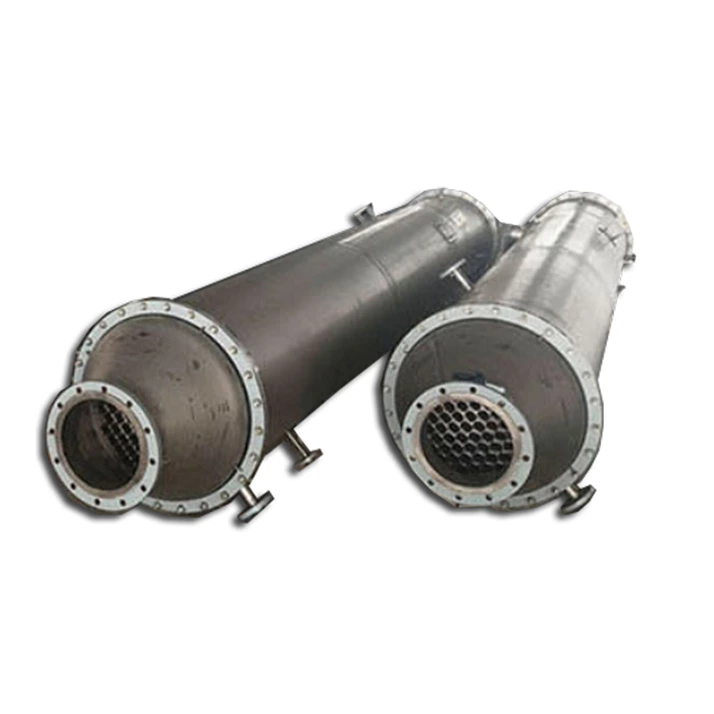
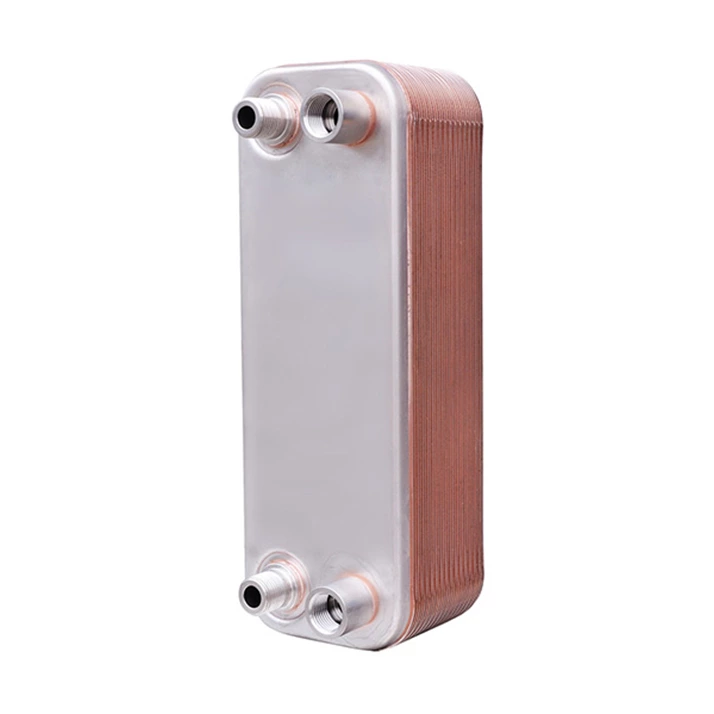
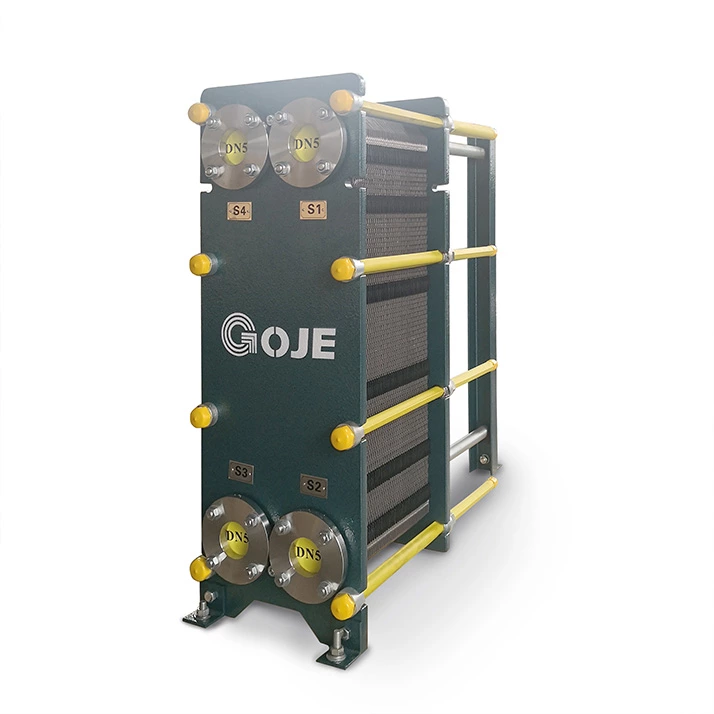
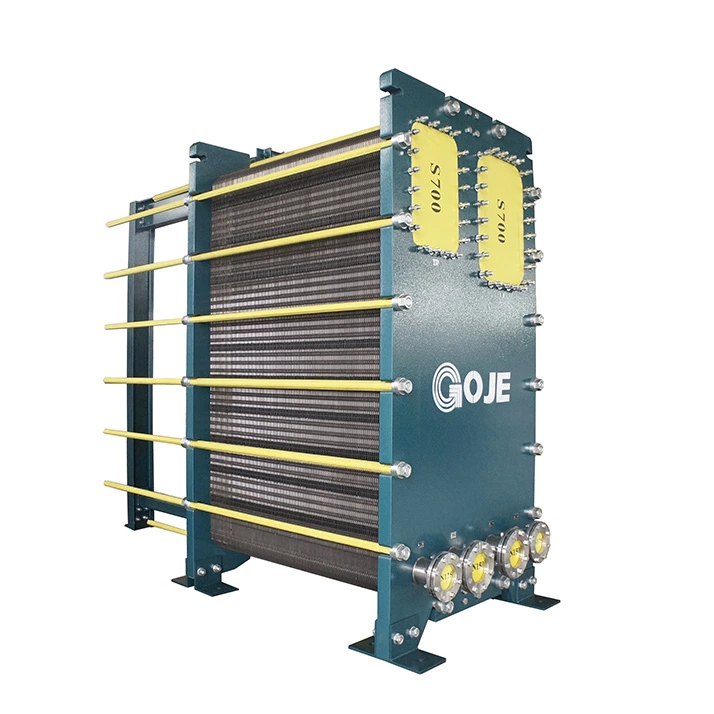
When a plate heat exchanger experiences an internal leak: The dangers of high-voltage side leakage into low-voltage side are more serious than you think.
In numerous industrial sectors such as chemical, refrigeration, pharmaceutical, and power industries, plate heat exchangers have long been a core component of heat exchange processes due to their high efficiency, compact design, and ease of cleaning. However, with increasing service life and fluctuating operating conditions, a hidden, potentially fatal problem is quietly threatening the safety of production systems— plate perforation or secondary seal failure .
When a heat exchanger plate develops a tiny perforation, or when the secondary sealing structure between the plate and the gasket fails, the high-pressure side medium can directly leak into the low-pressure side . This "internal leakage" is not as easily detected by the naked eye as external leakage, but its consequences are often enough to paralyze an entire production system.
1. Which industries are most "afraid" of this kind of internal leakage?
The following industries have extremely high requirements for the purity of the medium and the corrosion resistance of the equipment; once a high-pressure surge occurs and the pressure drops, the losses will be incalculable:
| industry | Typical media | Consequences of internal leakage |
| Fine Chemicals | Acids, bases, and solvents | Cross-contamination, product spoilage, and runaway reaction |
| Pharmaceuticals | Raw materials, purified water | The entire batch of products was substandard and did not comply with GMP regulations. |
| Food and Beverage | Milk, juice, syrup | Microbial contamination, product spoilage, and recall risks |
| Refrigeration and air conditioning | Refrigerant, refrigeration oil | Compressor failure, decreased cooling efficiency, and soaring energy consumption |
| Power/Metallurgy | Cooling water, lubricating oil | Emulsification, scaling, equipment overheating and shutdown |
| Shipbuilding/Ocean Engineering | Seawater, fresh water, fuel oil | Seawater corrosion of freshwater systems, fuel oil emulsification |
Second, the real impact of internal leakage goes far beyond simply "fixing it".
1️⃣ Product quality issues lead to scrapping and huge economic losses .
In a fine chemical or pharmaceutical production line, internal leaks in heat exchangers often mean cross-contamination of the entire batch of products. Taking pharmaceuticals as an example, the cost of a batch of raw materials can be as high as hundreds of thousands or even millions of yuan. Once contaminated by industrial water on the cooling side, the entire batch must be scrapped.
2️⃣ Equipment undergoes accelerated corrosion and scaling .
When a high-pressure medium (such as an acid, alkali, or salt solution) enters the low-pressure side, it disrupts the chemical equilibrium on the low-pressure side, causing drastic changes in local pH, leading to:
- Pitting corrosion and stress corrosion cracking of plates
- Sealing gaskets age faster
- Corrosion perforation of pipelines and downstream equipment
3️⃣ System energy consumption surges, production efficiency declines .
Internal leakage can lead to a decrease in the heat transfer efficiency of the heat exchanger (accelerated fouling), forcing the system to increase the flow rate or reduce the load, which can increase energy consumption by 15% to 30%.
4️⃣ Safety hazards and environmental risks
If the leaked medium is toxic, flammable, or has high temperature and pressure characteristics, it may also cause:
- Poisoning
- fire and explosion
- Exceeding environmental emission standards, fines, or even production shutdowns for rectification
5️⃣ High maintenance and downtime costs
Troubleshooting internal leaks is inherently very difficult (they are not visible externally and require pressure drop testing or media analysis). Once confirmed, it typically requires:
- Complete disassembly
- Inspect dozens or even hundreds of plates one by one
- Replace damaged plates or gaskets
- Reassemble and pressure test for leaks
- Production lines can be shut down for hours or even days.
- III. Solution: Double-walled plate heat exchanger, designed for "zero mixing"
- Faced with the persistent problem of "high pressure crossing into low pressure", the most thorough and reliable engineering solution was the double-walled plate heat exchanger , which was first adopted by Kao Chieh Group .
- What is a double-walled plate heat exchanger?
- In simple terms, it upgrades the traditional single-layer sheet to a two-layer metal composite structure . A tiny leakage channel (usually 0.5~2mm) is formed between the two layers, and visible or detectable drainage holes are provided .
How does it work?
- When the first layer leaks due to perforation or corrosion, the medium will not directly enter the flow channel on the other side.
- The leaking medium will first enter the leakage cavity between the double-layer plates , and then be safely discharged through the guide hole (which can be connected to a detection instrument or led out directly).
- The second layer remains sealed to prevent the medium from entering the other side.
- What are its key advantages compared to traditional heat exchangers?
| Comparison items | Traditional plate heat exchanger | Double-walled plate heat exchanger |
| Prevent cross-contamination | ❌Unstoppable | ✅Physical isolation to ensure zero mixing |
| Leak detection | Difficult, requires machine shutdown and inspection. | Easy to connect; the drainage hole can be connected to an external leak detector or visually inspected. |
| Security and compliance | generally | High, meeting high standards such as GMP/API/ASME. |
| Service life | Largely affected by single-layer perforation | Dual-layer protection, redundant design, more reliable |
| Total life cycle cost | Frequent repairs and significant downtime losses | Low maintenance costs and higher overall cost-effectiveness |
Typical application scenarios
- Pharmaceutical industry : Cooling of purified water/water for injection to prevent industrial water contamination.
- Fine Chemicals : Heat exchange with highly corrosive media to prevent leaks and equipment burnout.
- Refrigeration system : A connection between ammonia/Freon and chilled water is used to prevent ammonia leakage into the water system.
- Food processing : Preventing cross-contamination of microorganisms between high-temperature materials and cooling water.
IV. Do you really need a double-wall heat exchanger? These 3 questions will help you decide.
If your production system meets any of the following criteria , we strongly recommend considering upgrading to a double-walled plate heat exchanger:
- Mixing the media can produce chemical reactions, release heat, precipitate solids, or generate toxic substances.
- The product quality requirements are extremely high, and any cross-contamination (such as in pharmaceuticals and food) is not allowed.
- Downtime costs are extremely high, and frequent maintenance or unexpected shutdowns cannot be tolerated.
If none of the above three conditions are met, traditional single-layer plate heat exchangers plus regular leak checks remain the economical choice for general industrial scenarios.
V. In Conclusion
"High-pressure side leakage into low-pressure side" is not a rare event, but one of the common failure modes in the long-term operation of plate heat exchangers. You cannot completely eliminate plate perforation, but you can choose a design that makes "perforation" no longer mean "mixing".
The double-walled plate heat exchanger is an engineering solution designed for scenarios where "not a single drop of medium can be mixed up."
Want to learn about the selection methods, mainstream brands, or procurement costs of double-walled plate heat exchangers?
Feel free to leave a comment or send a private message, and we will provide you with more in-depth technical analysis and case studies.